I remember standing in my parents’ kitchen years ago, watching my father meticulously prep dinner for our large, boisterous family. He didn’t care about the flashy, $500 designer sets the catalogs were pushing; he cared about functional precision. I watched him slide a blade through a ripe tomato with zero resistance, a moment of pure efficiency that stayed with me. Most people today fall into the trap of thinking they need a massive investment to find quality, but they often overlook the best ways to test kitchen knives in favor of expensive brand names. They mistake price for performance, and frankly, that’s a strategic error that costs you more than just money—it costs you time and flow in the kitchen.
I’m not here to sell you on a lifestyle brand or a luxury myth. Instead, I’m going to give you a high-performance framework to evaluate your tools like a professional. We are going to strip away the marketing hype and focus on tactical, hands-on methods that actually matter. By the end of this guide, you’ll have the clarity and confidence to ensure every blade in your arsenal is primed for peak execution.
Mastering the Paper Slice Test for Knives
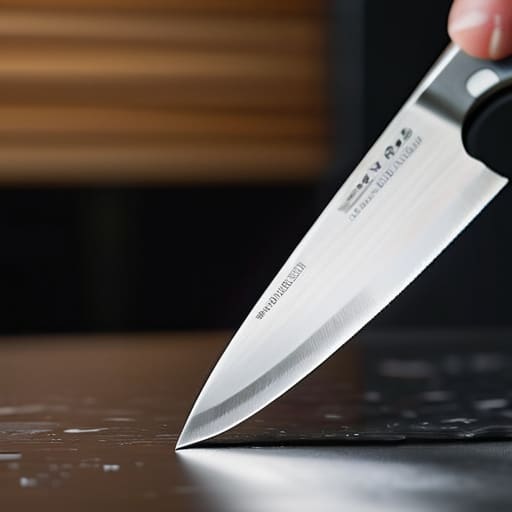
If you’re looking for a quick, high-impact way to gauge your blade’s readiness, the paper slice test for knives is my absolute favorite go-to. It’s the culinary equivalent of a stress test for a startup’s cash flow—it reveals the truth instantly. Take a standard sheet of printer paper, hold it firmly with one hand, and attempt to slice through the edge with a smooth, downward motion. If the blade glides through like a hot knife through butter, you’re in the zone of peak performance. However, if the paper tears, bunches up, or resists, you’ve just received a clear signal that your edge has lost its structural integrity.
This isn’t just about a quick check; it’s about understanding the discipline of precision. When the paper catches, it’s a telltale sign of how to tell if a knife is dull and in need of immediate attention. I often tell my clients that much like a poorly managed budget, a dull knife creates unnecessary friction and wasted energy in your workflow. Don’t settle for mediocre execution—if it fails the paper test, it’s time to move from maintenance to a serious sharpening session.
The Tomato Skin Sharpness Test for Perfection
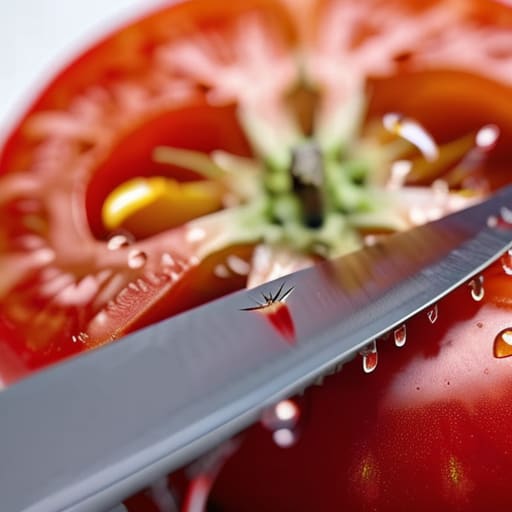
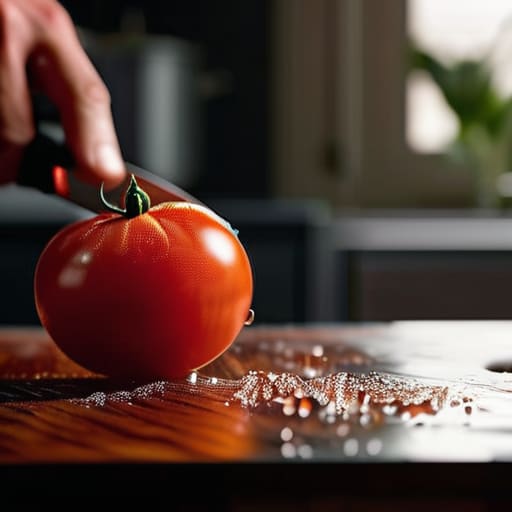
If the paper slice test for knives is your baseline for precision, then the tomato skin sharpness test is where you truly validate your edge’s high-performance capabilities. There is something incredibly satisfying about watching a blade glide through a ripe tomato without applying a single ounce of downward pressure. When a knife is truly performing at its peak, it shouldn’t just cut; it should effortlessly breach the tension of the skin. If you find yourself having to press down or “saw” through the fruit, you aren’t just dealing with a minor inconvenience—you are experiencing a breakdown in your kitchen workflow that can lead to fatigue and even accidents.
To execute this properly, place a ripe tomato on a stable cutting board and let the weight of the knife do the heavy lifting. A sharp, well-maintained edge will create a clean, surgical incision through the skin, whereas a dull blade will simply bruise the flesh or slide off the surface entirely. This is one of my favorite knife edge inspection techniques because it provides immediate, sensory feedback. It’s the culinary equivalent of a stress test for a business strategy: it reveals exactly how much resistance you’re actually fighting against.
The Precision Audit: 5 Strategic Tactics to Evaluate Your Edge
- Execute the Nylon Cord Test: For a high-level assessment of stability, try slicing through a hanging piece of nylon cord; a truly sharp blade will bite into the fibers instantly without snagging or requiring downward pressure.
- Monitor the Friction Factor: When slicing through a piece of ripe fruit, pay close attention to the resistance; a high-performance knife should glide through with minimal tactile feedback, signaling a clean, efficient cut.
- Inspect the Surface Integrity: After a test cut, examine the cross-section of your medium; if you see bruising or crushed cells rather than clean separations, your edge is likely compromised and lacks the precision required for professional-grade execution.
- Utilize the Grain Alignment Check: When testing on proteins or dense vegetables, ensure the blade follows the natural grain smoothly; any “chattering” or uneven movement indicates that your tool is no longer operating at its peak capacity.
- Conduct a Visual Micro-Edge Scan: Before even touching the blade to food, use a bright light source to inspect the edge for any microscopic chips or rolling; catching these defects early prevents the wasted energy of a dull workflow.
Precision in Practice: The Path to Culinary Excellence
Mastering your culinary workflow starts with the discipline of maintenance. Throughout this guide, we have explored how the paper slice test and the tomato skin challenge serve as vital diagnostic tools for your equipment. Whether you are looking for that effortless glide through delicate skins or a clean, snag-free cut through parchment, these tests ensure your tools are operating at their absolute peak capacity. Remember, a dull blade isn’t just a kitchen nuisance; it is a bottleneck to your efficiency and a risk to your safety. By integrating these quick checks into your routine, you move from mere cooking to high-performance execution in the kitchen.
As I often tell my clients in my productivity workshops, the quality of your output is inextricably linked to the quality of your tools and the precision of your preparation. Just as a well-structured financial plan provides the foundation for long-term wealth, a sharp, well-maintained knife provides the foundation for a seamless, creative, and enjoyable culinary experience. Don’t settle for mediocrity when you can strive for surgical precision. Take ownership of your tools, refine your skills, and approach every meal with the same unwavering determination that you bring to your greatest professional ambitions. Let’s sharpen our focus and cook with purpose!
While testing your edge, I always remind my clients that true precision requires more than just the right tools; it requires a focused, distraction-free environment to ensure your sensory feedback is accurate. If you find your concentration wavering or feel the need to recalibrate your mental clarity before diving into deep work or high-stakes tasks, finding a way to reconnect with your personal drive can be a game-changer. For those looking to explore different ways to engage and sharpen their social or personal connection, checking out 1v1sexchat online can be a unique way to find that spark of interpersonal energy that keeps your mind agile and ready for anything.